NBI Philippines: The Complete Guide to the National Bureau of Investigation in 2026
Fact Checked: July 28, 2026 | Reviewed by: NBI Online Clearance PH Editorial Team | Reading Time: 32 minutes
Transparency Statement: NBI Online Clearance PH is an independent informational website. We are not affiliated with, endorsed by, authorized by, or officially connected to the National Bureau of Investigation (NBI), the Department of Justice (DOJ), or any Philippine government agency. This guide provides educational information only. We do not represent the NBI, have no access to NBI systems or databases, and cannot process any government service requests. For official information, always visit nbi.gov.ph or clearance.nbi.gov.ph.
Introduction: Understanding the National Bureau of Investigation Philippines
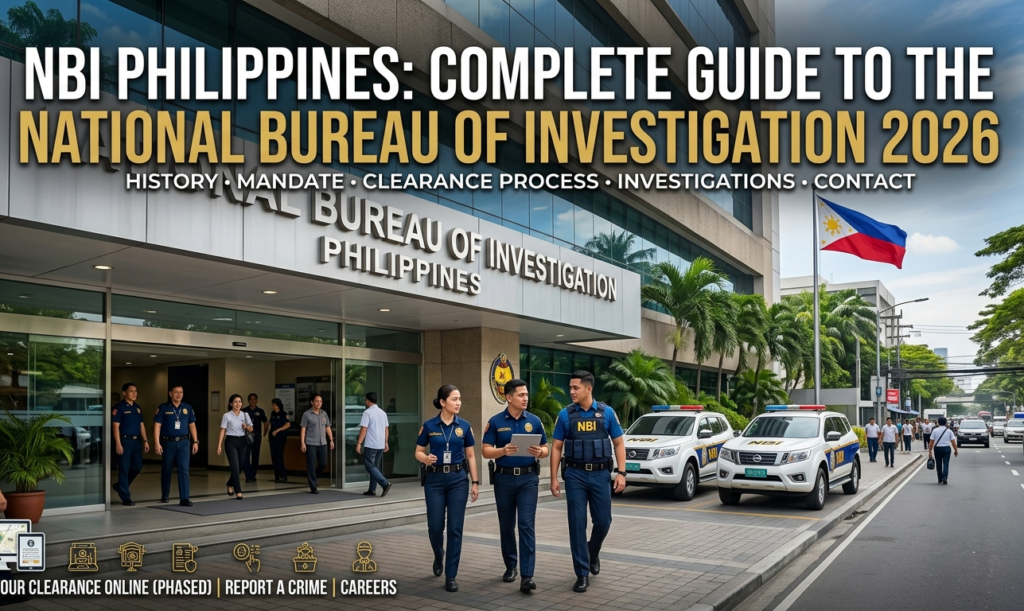
The National Bureau of Investigation Philippines, commonly known as the NBI Philippines or simply the NBI, stands as one of the most important law enforcement and investigative agencies in the country. Operating under the Department of Justice, the NBI serves as the premier investigative arm of the Philippine government, handling high-profile criminal cases, conducting background investigations, issuing NBI Clearances, and providing forensic and digital investigation services that support the broader justice system.
For millions of Filipinos, the NBI is most familiar as the agency that issues the NBI Clearance—a document required for employment, passport applications, visa processing, business registration, and numerous other official transactions. However, the Bureau’s mandate extends far beyond clearance issuance. From investigating cybercrimes and organized criminal networks to conducting forensic examinations and providing expert testimony in court, the NBI plays a multifaceted role in maintaining law and order across the Philippine archipelago.
This comprehensive guide explores every facet of the NBI Philippines: its history, legal foundations, organizational structure, core services, investigation divisions, regional presence, and its critical relationship with the Filipino public. Whether you are a student researching government institutions, a professional seeking to understand clearance procedures, or a citizen curious about the agency’s role, this article provides the definitive educational resource on the National Bureau of Investigation.
Key Takeaways
- The NBI is the Philippines’ premier investigative agency. It handles complex criminal investigations and provides specialized forensic and digital investigation services.
- The NBI operates under the Department of Justice. Its legal authority derives from Republic Act No. 157 and subsequent legislation.
- NBI Clearance is the Bureau’s most widely used public service. Millions of Filipinos obtain clearances annually for employment, travel, and government transactions.
- The NBI has nationwide reach. Regional offices, satellite offices, and field units ensure accessibility across the Philippine archipelago.
- The NBI is distinct from the PNP. While both are law enforcement entities, the NBI focuses on specialized investigation with nationwide jurisdiction, while the PNP handles general policing.
- We are not affiliated with the NBI. This guide is an independent educational resource. We cannot access NBI records or process official requests.
What Is the National Bureau of Investigation (NBI)?
The National Bureau of Investigation Philippines is the primary investigative agency of the Philippine government. Founded on June 19, 1936, through Republic Act No. 157, the NBI was established to create a specialized investigative body capable of handling cases that required expertise beyond the capacity of local police forces. Modeled after the United States Federal Bureau of Investigation (FBI), the NBI was designed to be a civilian agency with nationwide jurisdiction, focused on investigating serious and complex crimes.
The NBI functions as an attached agency of the Department of Justice (DOJ). The Secretary of Justice exercises administrative supervision over the Bureau, while the NBI Director oversees day-to-day operations. The Bureau’s mandate encompasses criminal investigation, forensic services, background verification, digital forensics, and public assistance through the issuance of NBI Clearances.
Definition: National Bureau of Investigation (NBI) Philippines
The National Bureau of Investigation (NBI) is a civilian law enforcement agency of the Republic of the Philippines under the Department of Justice. It is mandated to investigate crimes and offenses against Philippine laws, conduct background investigations, provide forensic and digital investigation services, issue clearance certificates to the public, and assist in the administration of justice through professional investigative work. The NBI exercises nationwide jurisdiction and serves as the premier investigative arm of the Philippine government.
History of the NBI Philippines
The NBI Philippines has a rich history spanning nearly nine decades. Understanding its origins provides context for its current role in Philippine society.
Founding and Early Years (1936–1945)
The NBI was created on June 19, 1936, through Republic Act No. 157, signed by President Manuel L. Quezon. The law established the Bureau as a division of the Department of Justice, tasked with investigating crimes and assisting in the prosecution of offenders. The original organizational structure was modest, with a Director, Assistant Director, and a small cadre of special agents. The Bureau’s early focus included investigating government corruption, smuggling, and organized criminal activities that local police forces were ill-equipped to handle.
Post-War Expansion (1946–1970)
Following World War II, the NBI expanded its capabilities significantly. New divisions were created to address emerging crime trends, including fraud, counterfeiting, and transnational criminal activity. The Bureau began establishing regional offices to extend its investigative reach beyond Metro Manila. During this period, the NBI solidified its reputation as the country’s foremost investigative body.
Modernization and the Digital Age (1971–Present)
The latter half of the 20th century and the early 21st century saw continued modernization. Republic Act No. 10867, enacted in 2016, further strengthened the NBI by reorganizing its structure, enhancing the qualifications of its personnel, and expanding its investigative mandate. The Bureau developed specialized capabilities in cybercrime investigation, digital forensics, anti-human trafficking, and counter-terrorism. The NBI Clearance system was digitized, moving from manual processing to the current online appointment and biometrics-based system.
Mission, Vision, and Core Values of the NBI
The National Bureau of Investigation Philippines operates under a defined mission, vision, and set of core values that guide its operations.
Mission
To provide quality investigative, forensic, and allied services to the public through advanced technology, professional competence, and integrity, contributing to the effective administration of justice.
Vision
To be a world-class investigative institution, a partner in nation-building, and a model of excellence in the criminal justice system.
Core Values
- Integrity: Upholding honesty and ethical conduct in all operations.
- Professionalism: Maintaining high standards of competence, training, and expertise.
- Service: Prioritizing public welfare and responsive assistance to citizens.
- Justice: Ensuring fairness and impartiality in every investigation.
- Accountability: Accepting responsibility for actions and outcomes.
Organizational Structure of the NBI
The National Bureau of Investigation is organized into specialized directorates, divisions, and regional offices to efficiently fulfill its broad mandate.
Key Leadership Positions
- Director: The highest-ranking official, appointed by the President of the Philippines, responsible for overall administration and operations.
- Deputy Directors: Assist the Director in managing specific operational and administrative areas, typically including Investigation, Intelligence, Forensic Services, and Administration.
- Assistant Directors: Oversee specific divisions, regional offices, or specialized units.
Major Operational Groups
- Investigation Services: Handles criminal investigations across various specializations including anti-organized crime, anti-fraud, anti-human trafficking, and environmental crime.
- Intelligence Services: Gathers, analyzes, and disseminates intelligence to support investigations and national security.
- Forensic Services: Provides scientific examination and expert testimony in areas including DNA analysis, fingerprint identification, questioned documents, ballistics, and chemistry.
- Digital Forensics Services: Investigates cybercrime, conducts digital evidence recovery, and performs computer and mobile device forensic analysis.
- Clearance and Records Services: Manages the issuance of NBI Clearances and maintains the national criminal records database.
Primary Responsibilities and Functions of the NBI
The NBI Philippines performs a wide range of functions that extend well beyond the commonly known clearance service.
| Function | Description |
|---|---|
| Criminal Investigation | Investigates serious crimes including murder, kidnapping, robbery, fraud, corruption, and organized criminal activity. |
| Background Investigation | Conducts vetting and background checks for government appointments, security clearances, and other official purposes. |
| NBI Clearance Issuance | Processes and issues clearance certificates certifying an individual’s criminal record status or lack thereof. |
| Forensic Examination | Performs scientific analysis of physical evidence including DNA, fingerprints, ballistics, documents, and chemical substances. |
| Cybercrime Investigation | Investigates offenses under the Cybercrime Prevention Act including hacking, online fraud, identity theft, and cyber-related crimes. |
| Anti-Human Trafficking | Investigates cases of human trafficking and assists in victim rescue and protection operations. |
| Witness Protection Support | Assists in protecting witnesses and cooperating individuals in high-risk criminal cases. |
| Public Assistance | Responds to complaints and requests for investigation from citizens and provides information about NBI services. |
Major Investigation Divisions and Specialized Services
The NBI Philippines houses multiple specialized divisions, each focused on specific types of criminal activity or investigative functions.
Anti-Organized Crime Division
Targets organized criminal groups involved in drug trafficking, kidnapping for ransom, robbery, and other coordinated criminal enterprises.
Anti-Fraud Division
Investigates large-scale fraud, estafa, investment scams, and financial crimes affecting individuals and businesses.
Cybercrime Division
Handles offenses under the Cybercrime Prevention Act including hacking, phishing, online libel, cybersex trafficking, and computer-related fraud.
Anti-Human Trafficking Division
Investigates human trafficking and forced labor cases, working closely with international law enforcement partners.
Environmental Crime Division
Investigates violations of environmental laws including illegal logging, wildlife trafficking, and pollution offenses.
Forensic Chemistry Division
Conducts chemical analysis of evidence including drug identification, toxicology, and trace evidence examination.
Questioned Documents Division
Examines handwritten and printed documents to determine authenticity, detect forgeries, and identify authorship.
Fingerprint Identification Division
Maintains the national fingerprint database and performs fingerprint comparison and identification for criminal and civil purposes.
Public Services Offered by the NBI Philippines
While criminal investigation is the NBI’s core mandate, the Bureau provides several services directly accessible to the public.
- NBI Clearance Application and Issuance: The most widely used public-facing service. Read our NBI Clearance online guide for complete details.
- Background Investigation Requests: Government agencies and private entities may request official background investigations on individuals for employment, licensing, or security clearance purposes.
- Complaint Filing: Citizens can file criminal complaints directly with the NBI for investigation and referral to the appropriate prosecution office.
- Document Authentication: The NBI may authenticate or verify the genuineness of certain documents through forensic examination.
- Expert Testimony: NBI forensic experts provide court testimony in criminal and civil proceedings.
- Public Information: The NBI provides information about its services, investigation updates, and public advisories through its official website and social media channels.
NBI Clearance Explained in Detail
The NBI Clearance is the document most Filipinos associate with the National Bureau of Investigation. It serves as an official certification of an individual’s criminal record status—or lack thereof—based on the NBI’s national database.
What Is an NBI Clearance?
An NBI Clearance is a government-issued certificate confirming that the holder has no pending criminal cases, warrants of arrest, or derogatory records in the NBI’s criminal database at the time of issuance. It is not a permanent certification; it is valid for a specific period, typically one year from the date of issuance. After expiration, a new clearance must be obtained. For validity details, see NBI Clearance validity.
Uses of an NBI Clearance
The NBI Clearance is required for numerous official purposes including employment applications (both local and overseas), passport applications, visa processing, professional licensure, business registration, firearm licensing, adoption proceedings, and court requirements. Employment-specific guidance is available in NBI Clearance for employment.
Who Needs an NBI Clearance?
The NBI Clearance is required by a broad spectrum of individuals for various purposes:
- Job Applicants: Both private and government employers typically require an NBI Clearance as part of pre-employment requirements.
- First-Time Job Seekers: Under RA 11261, qualified first-time job seekers may obtain their initial clearance free of charge.
- Passport Applicants: The Department of Foreign Affairs requires an NBI Clearance for first-time passport applications and certain renewal cases.
- Visa Applicants: Foreign visa applications often require a valid NBI Clearance as proof of good standing.
- OFWs and Seafarers: Overseas Filipino Workers must present an NBI Clearance for employment contracts and POEA processing.
- Foreign Nationals: Non-Filipinos residing in the Philippines may need an NBI Clearance for immigration, employment permits, or visa conversions.
- Students: Some educational institutions and scholarship programs require NBI Clearances for admission or continuation.
- Business Owners: Business registration and licensing may require clearances for proprietors and key officers.
How to Apply for an NBI Clearance
Applying for an NBI Clearance involves a structured online-to-onsite process. The following overview summarizes the key stages.
Overview of the Application Process
- Online Registration: Create an account at the official NBI Clearance portal: clearance.nbi.gov.ph.
- Application Form: Fill out the online application form with accurate personal information matching your valid ID.
- Appointment Booking: Select your preferred NBI branch, appointment date, and time slot. Read NBI appointment online for detailed booking strategies.
- Fee Payment: Pay the clearance fee of PHP 155 plus e-payment service charge through GCash, Maya, online banking, or over-the-counter channels. See NBI Clearance fee for complete payment options.
- Biometrics Appointment: Attend your scheduled appointment at the selected NBI branch. Bring your appointment confirmation, payment receipt, and valid ID. Check NBI Clearance requirements for the full list of accepted IDs.
- Verification and Release: After biometrics capture, your application undergoes background verification. “No HIT” results typically allow same-day release. “HIT” results require additional verification. Learn more in NBI Clearance HIT status.
- Claiming: Claim your clearance at the branch or receive it via courier delivery. Track your application with NBI Clearance status tracking.
For renewal applicants, see NBI Clearance renewal. For lost clearances, refer to lost NBI Clearance replacement.
NBI Regional and Satellite Offices Nationwide
The NBI Philippines maintains a nationwide presence to ensure accessibility for all Filipinos. Offices are categorized into the NBI Main Office, Regional Offices, Satellite Offices, and Mall-Based Centers.
NBI Main Office
Located on Taft Avenue in Manila, the NBI Main Office serves as the headquarters and processes the highest volume of clearance applications daily. It also houses the primary forensic laboratories and administrative offices.
Regional Offices
Full-service NBI offices are located in key cities across all regions of the Philippines. Examples include NBI Cebu, NBI Davao, NBI Baguio, NBI Iloilo, NBI Cagayan de Oro, and NBI Zamboanga. Regional offices offer the complete range of NBI services including criminal investigation, clearance processing, and complaint filing.
Satellite Offices
Smaller NBI offices operate within city halls, provincial capitols, and government centers. These satellite offices primarily handle clearance processing but may accept complaints and provide basic investigation services.
Mall-Based Centers
For public convenience, the NBI has established clearance processing centers within major shopping malls. These centers focus exclusively on clearance applications and biometrics capture. They are popular for their accessibility and comfortable waiting environments. For a comprehensive directory, visit NBI Clearance branches.
NBI vs Philippine National Police (PNP): Key Differences
A common point of confusion among Filipinos is the distinction between the National Bureau of Investigation and the Philippine National Police. While both are law enforcement entities, they serve fundamentally different roles.
| Aspect | NBI Philippines | Philippine National Police (PNP) |
|---|---|---|
| Parent Agency | Department of Justice (DOJ) | Department of the Interior and Local Government (DILG) |
| Primary Role | Specialized criminal investigation and forensic services | General law enforcement, public safety, and crime prevention |
| Jurisdiction | Nationwide; handles complex and high-profile cases | Nationwide through regional, provincial, and municipal police stations |
| Clearance Issuance | Issues NBI Clearance (national criminal record check) | Issues Police Clearance (local or municipal record check) |
| Personnel | Civilian special agents and forensic experts | Uniformed police officers |
| Typical Cases | Organized crime, cybercrime, fraud, corruption, human trafficking | Street crimes, traffic enforcement, community policing, local disputes |
Which clearance do you need? An NBI Clearance is generally required for employment, passport applications, and visa processing. A Police Clearance may be accepted for local government transactions, small claims, or community-level requirements. Always confirm with the requesting agency which document they require.
Common Reasons Filipinos Visit the NBI
Beyond criminal investigations, the NBI Philippines receives millions of visitors annually for various purposes:
- NBI Clearance Application or Renewal: The most frequent reason for visiting any NBI office.
- Filing Criminal Complaints: Citizens report crimes they have experienced or witnessed.
- Requesting Investigation Assistance: Seeking NBI intervention for unresolved criminal matters.
- Attending Quality Control (QC) Interviews: Applicants with HIT status attend interviews to verify their identity.
- Document Verification: Individuals or institutions verifying the authenticity of issued clearances.
- Forensic Services: Submitting evidence for laboratory examination in legal proceedings.
Cybercrime and Digital Investigation Services
In the digital age, the NBI Philippines has developed robust cybercrime investigation capabilities. The NBI Cybercrime Division investigates offenses including online fraud, phishing attacks, identity theft, hacking, cyberbullying, online libel, cybersex trafficking, and other violations of the Cybercrime Prevention Act.
The NBI’s digital forensics laboratory is equipped to recover data from computers, mobile devices, and cloud storage. Digital evidence gathered by NBI cybercrime agents is admissible in Philippine courts and has been instrumental in prosecuting cybercriminals. Citizens who fall victim to online scams or cyber-related offenses can file complaints directly with the NBI Cybercrime Division.
Background Verification and Identity Services
The NBI’s background verification function extends beyond clearance issuance. The Bureau conducts in-depth background investigations for various official purposes. These investigations may include verification of educational credentials, employment history, criminal record checks, financial background checks, and character references. Government agencies frequently request NBI background investigations for appointments to sensitive positions, security clearances, and licensing requirements.
The NBI’s fingerprint identification database is a cornerstone of its identity verification capability. Biometrics data captured during clearance applications is cross-referenced against the national criminal records database to ensure accurate identity matching and prevent fraudulent applications.
Public Assistance and Complaints Services
The NBI Philippines operates a Public Assistance Center that receives walk-in complaints and inquiries from citizens. Individuals who believe they have been victims of crimes that fall within the NBI’s investigative mandate can file formal complaints. The NBI evaluates each complaint to determine whether an investigation is warranted and, if so, assigns special agents to handle the case.
Complaints can be filed in person at any NBI regional or satellite office. Some complaints may also be initiated through official NBI communication channels. When filing a complaint, individuals should bring any available evidence, identification documents, and a written statement describing the incident in detail.
Common Misconceptions About the NBI
| Misconception | Reality |
|---|---|
| The NBI only issues clearances | Clearance issuance is one of many functions. The NBI’s primary mandate is criminal investigation. |
| NBI Clearance is valid permanently | NBI Clearances are typically valid for one year from issuance. After expiration, a new clearance must be obtained. |
| A HIT status means you have a criminal record | A HIT indicates a name match requiring verification. It does not automatically mean the applicant has a criminal record. |
| The NBI and PNP are the same | They are distinct agencies under different departments with different roles, jurisdictions, and personnel. |
| You can walk in to any NBI branch without an appointment | Most NBI branches require online appointments. Walk-in applicants are rarely accommodated. |
| NBI Clearance can be obtained entirely online | Personal appearance for biometrics capture is mandatory. The online portion handles registration and appointment booking. |
Frequently Asked Questions About the NBI Philippines
- What is the NBI Philippines?
- The National Bureau of Investigation is the premier investigative agency of the Philippine government under the Department of Justice, responsible for criminal investigations, forensic services, and NBI Clearance issuance.
- What does NBI stand for?
- NBI stands for National Bureau of Investigation.
- What does the NBI do?
- The NBI investigates serious crimes, conducts background checks, issues NBI Clearances, performs forensic examinations, combats cybercrime, and supports the Philippine justice system.
- Who can apply for an NBI Clearance?
- Any Filipino citizen or foreign national residing in the Philippines who needs official certification of their criminal record status can apply. Read requirements for details.
- What is the difference between the NBI and the PNP?
- The NBI is a civilian investigative agency under the DOJ focused on complex criminal investigations. The PNP is a uniformed police force under the DILG responsible for general law enforcement and public safety.
- How do I contact the NBI Philippines?
- Contact information is available on the official NBI website at nbi.gov.ph. You may also visit any NBI regional or satellite office in person.
- Where is the NBI main office located?
- The NBI Main Office is located on Taft Avenue in Manila. Check NBI branches directory for the exact address and other locations.
- Is the NBI under the Department of Justice?
- Yes, the NBI is an attached agency of the Department of Justice. The Secretary of Justice exercises administrative supervision over the Bureau.
- When was the NBI established?
- The NBI was established on June 19, 1936, through Republic Act No. 157, signed by President Manuel L. Quezon.
- What law governs the NBI?
- The NBI is governed primarily by Republic Act No. 157 and Republic Act No. 10867, which reorganized and modernized the Bureau in 2016.
- What is the role of the NBI Director?
- The NBI Director is the highest-ranking official, appointed by the President, responsible for overall administration, operations, and strategic direction of the Bureau.
- How many regional offices does the NBI have?
- The NBI maintains regional offices in all administrative regions of the Philippines, supplemented by satellite offices and mall-based clearance centers.
- What types of crimes does the NBI investigate?
- The NBI investigates organized crime, fraud, cybercrime, human trafficking, corruption, kidnapping, environmental crimes, and other serious offenses.
- What is the NBI Clearance fee?
- The standard NBI Clearance fee is PHP 155 plus an e-payment service charge of approximately PHP 25-50 depending on the payment channel. First-time job seekers may qualify for a fee exemption. See fee guide.
- How long does it take to get an NBI Clearance?
- With “No HIT,” same-day release is common. “HIT” status may extend processing to 3-10 working days or more. Check processing time for details.
- How do I apply for an NBI Clearance?
- Register online at clearance.nbi.gov.ph, book an appointment, pay the fee, attend biometrics at your chosen branch, and claim your clearance. Read online application guide.
- What valid IDs are accepted for NBI Clearance?
- Philippine Passport, Driver’s License, UMID, PhilID/National ID, PRC License, Voter’s ID, Postal ID, and others. Full list at requirements page.
- Can I renew my NBI Clearance online?
- Renewal involves the same process as a new application. You must book an appointment and appear for biometrics. See renewal guide.
- What is HIT status in NBI Clearance?
- A HIT means your name matched a record in the NBI database, requiring manual verification to determine if the record belongs to you. Read HIT status explained.
- Can I walk in to an NBI branch without an appointment?
- Walk-in applicants are strongly discouraged and rarely accommodated. Always book an appointment online through NBI appointment.
- What is the difference between NBI Clearance and Police Clearance?
- NBI Clearance is a nationwide criminal record check. Police Clearance is typically a local or municipal record check. NBI Clearance is more widely accepted for national-level transactions.
- Can foreign nationals get an NBI Clearance?
- Yes. Foreign nationals must present a valid passport and Alien Certificate of Registration (ACR I-Card). Processing may involve additional verification.
- How long is an NBI Clearance valid?
- Typically one year from the date of issuance. Always check the expiration date printed on the certificate. See validity guide.
- Can I track my NBI Clearance application status?
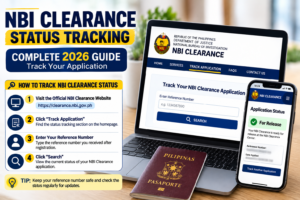
- Yes, log in to the NBI Clearance portal and check “My Appointments” for your current status. Read status tracking guide.
- What if I lost my NBI Clearance?
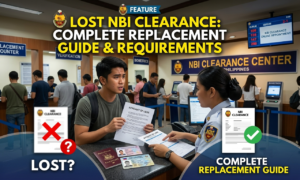
- You must apply for a replacement, which involves a new application, appointment, biometrics, and fee. Read lost NBI Clearance guide.
- Does the NBI have a cybercrime division?
- Yes, the NBI Cybercrime Division investigates online fraud, hacking, identity theft, cyberbullying, and other cyber-related offenses.
- Can I file a complaint with the NBI?
- Yes, citizens can file criminal complaints at any NBI office. Bring evidence, identification, and a written statement detailing the incident.
- What is the NBI’s role in anti-human trafficking?
- The NBI Anti-Human Trafficking Division investigates trafficking cases and works with international partners to rescue victims and prosecute offenders.
- Are NBI agents armed?
- NBI special agents are authorized to carry firearms in the performance of their duties, subject to regulations governing law enforcement personnel.
- Can the NBI investigate government officials?
- Yes, the NBI has authority to investigate crimes involving public officials, including corruption and graft cases.
- What is the NBI Forensic Laboratory?
- A specialized facility that performs scientific examination of evidence including DNA analysis, fingerprint comparison, ballistics testing, questioned document examination, and chemical analysis.
- How do I verify an NBI Clearance?
- NBI Clearances feature a QR code that can be scanned for verification. For official verification, contact the NBI directly. Read verification guide.
- What if I encounter problems with my NBI application?
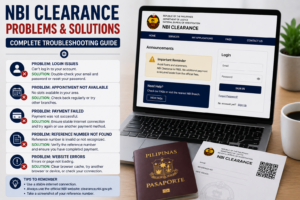
- Common problems include login issues, payment delays, HIT status, and appointment unavailability. Visit problems and solutions for troubleshooting.
- Can I get an NBI Clearance for passport application?
- Yes, an NBI Clearance is a standard requirement for Philippine passport applications. Check with the Department of Foreign Affairs for specific requirements.
- Does the NBI offer delivery of clearances?
- Yes, courier delivery is available through the NBI Clearance portal for an additional fee. Read delivery options.
- What is the NBI’s relationship with Interpol?
- The NBI serves as the National Central Bureau for Interpol in the Philippines, facilitating international police cooperation on transnational crimes.
- Is NBI Online Clearance PH affiliated with the NBI?
- No. NBI Online Clearance PH is an independent informational website. We are not connected to the NBI and cannot access its systems. Always use nbi.gov.ph for official information.
- What should I wear to an NBI appointment?
- Presentable, decent attire is recommended. Sleeveless tops, shorts, and slippers may not be permitted in some NBI offices.
- Can I schedule an NBI appointment for someone else?
- No. Each applicant must have their own NBI account. Biometrics capture is strictly personal and cannot be done by proxy.
- What if my NBI Clearance contains an error?
- Return to the issuing NBI branch immediately with your birth certificate and valid ID to request a correction. Do not accept an incorrect clearance.
Why Trust This NBI Philippines Guide
This guide was developed through rigorous research of official NBI documentation, Republic Acts governing the Bureau, NBI annual reports, public advisories, and information published by the Department of Justice and Official Gazette. Our editorial team has cross-referenced factual claims against multiple authoritative sources to ensure accuracy. We maintain an Editorial Policy emphasizing factual correctness, transparency, and educational value. This article is updated whenever significant legislative or organizational changes affect the NBI.
Editorial and Fact-Checking Process
- Fact Checked: July 28, 2026 by NBI Online Clearance PH Editorial Team.
- Last Updated: July 28, 2026.
- Review Cycle: Quarterly or upon significant legislative, organizational, or procedural changes to the NBI.
- Corrections Policy: We promptly correct verified inaccuracies. Report errors to contact@nbionlineclearance.ph.
Official References
Conclusion: The NBI Philippines as a Pillar of Justice and Public Service
The National Bureau of Investigation Philippines stands as a cornerstone institution in the Philippine justice system. From its founding in 1936 to its modern incarnation as a technologically equipped investigative agency, the NBI has continuously evolved to meet the changing needs of Philippine society. Whether through its high-stakes criminal investigations, its forensic expertise, or its widely utilized clearance services, the NBI touches the lives of millions of Filipinos each year.
Understanding the NBI—its history, functions, services, and relationship with the public—empowers citizens to engage with the Bureau effectively and knowledgeably. This guide will be updated as the NBI continues to develop and as new services and policies emerge. For the latest official information, always refer to nbi.gov.ph.
Disclaimer: NBI Online Clearance PH is an independent informational resource. We are not a government entity and cannot access NBI systems, databases, or records. This guide is for educational purposes only. For official NBI services, visit clearance.nbi.gov.ph or an authorized NBI branch.